Annual Meeting of the Ophthalmic Oncology Group
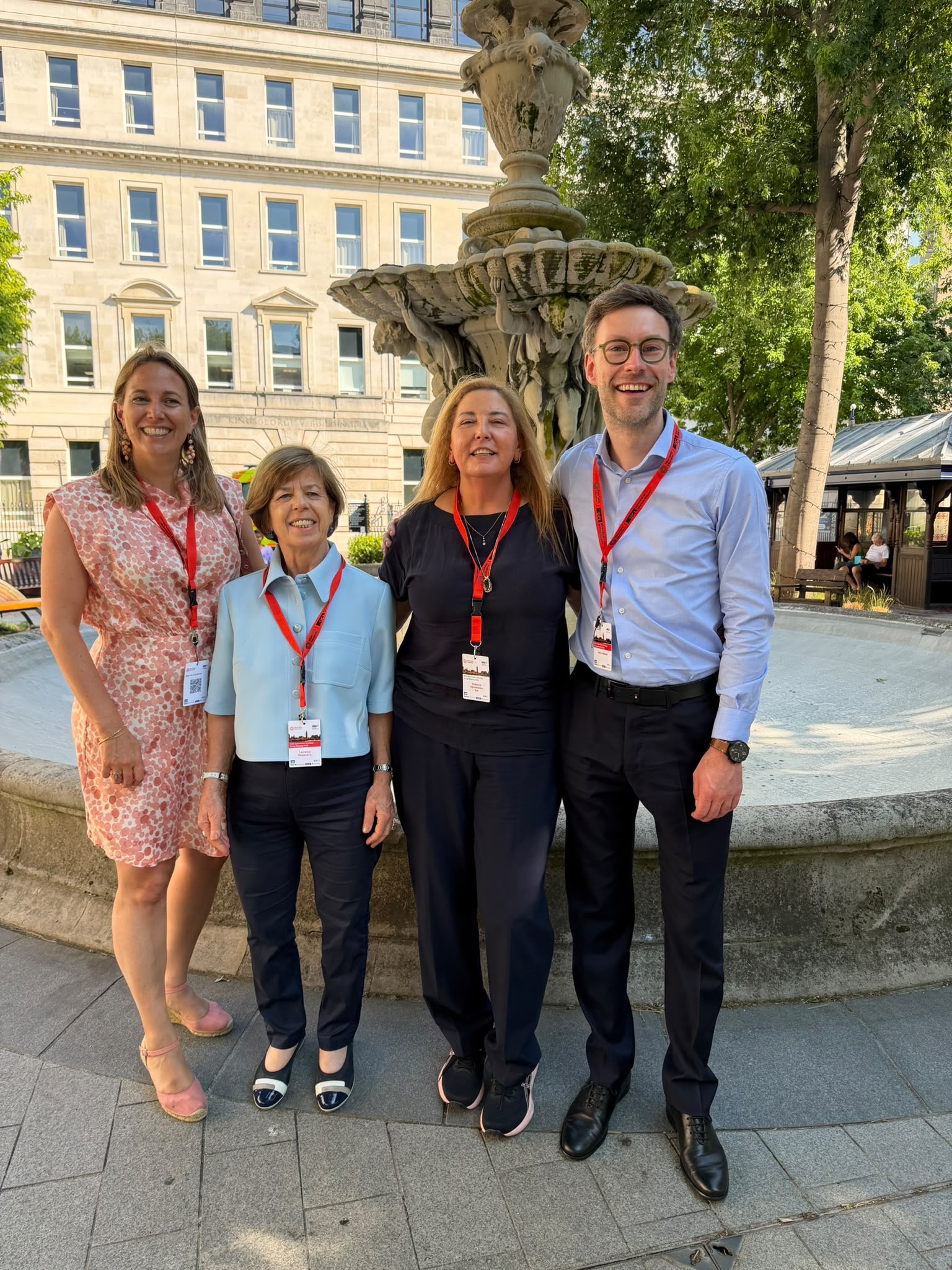
On July 4, 2026, the Retinoblastoma Program of the Alliance Mondiale Contre le Cancer (AMCC) was presented at the annual meeting of the Ophthalmic Oncology Group (OOG), which brought together the international ophthalmic oncology community in the main hall of the north wing of St. Bartholomew’s Hospital, London’s oldest hospital.
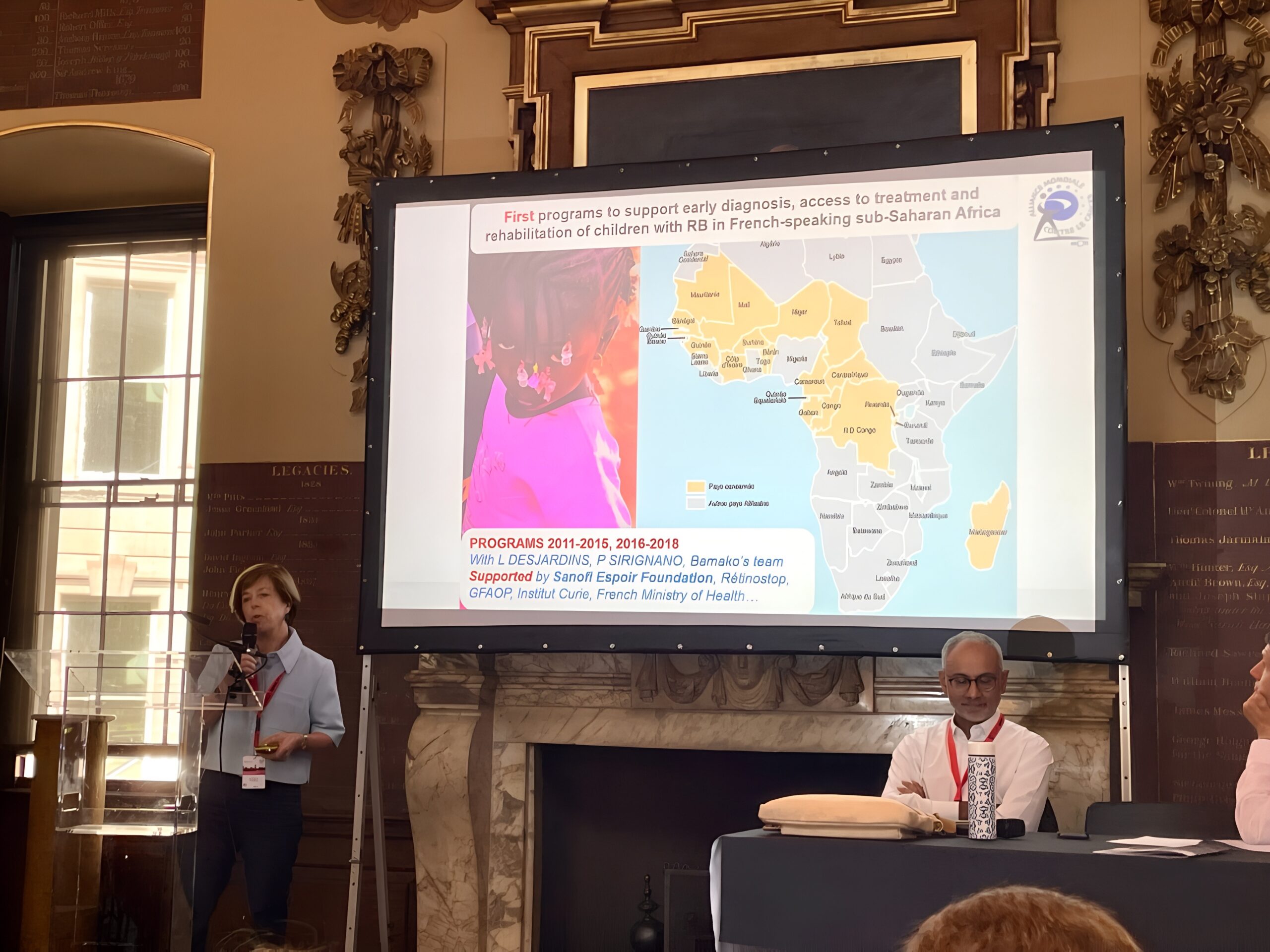
Since part of Saturday morning was devoted to retinoblastoma, Dr. Laurence Desjardins delivered the presentation: a five-minute talk followed by a three-minute Q&A session. The AMCC’s initiatives were warmly welcomed by the participants.
Founded on May 27, 1992, the Ophthalmic Oncology Group was originally a dedicated branch of the European Organization for Research and Treatment of Cancer (EORTC). Dr. Desjardins, who served as its president, had filed the association’s articles of incorporation with the Paris Prefecture.
Its members explore a wide range of topics in ophthalmic oncology and related fields, with the primary objective of researching and treating tumors affecting the eye, its adnexa, the conjunctiva, and the orbit. Since its inception, the OOG has been responsible for numerous publications and European collaborations. It is within this circle of experts that the work carried out by the AMCC in sub-Saharan Africa has been particularly well received.
Retinoblastoma is the most common eye cancer in children. When detected early, it is curable in the vast majority of cases. When diagnosed late—a situation that is still common in low-resource countries—it remains a major cause of childhood mortality. It is precisely this gap that the AMCC program aims to bridge.
The initiative began in 2011 with the first programs to support early diagnosis, access to treatment, and rehabilitation for children with retinoblastoma in French-speaking sub-Saharan Africa. The pilot project conducted in Mali, at Gabriel Touré Hospital and the African Institute of Tropical Ophthalmology (Bamako), served as proof of concept, published by Traoré and colleagues in *Pediatric Blood Cancer* in 2018.
Starting in 2019, a second program expanded the initiative to all French-speaking sub-Saharan countries, as well as to some English- and Portuguese-speaking countries—covering a population of over 600 million people and approximately 1,400 new cases per year.
By 2026, the network will reach an unprecedented scale:
- 32 multidisciplinary teams supported in 23 countries
- An interactive map of the teams available on our website
- A clear goal: a 70% ten-year cure rate
The program’s strength lies in its comprehensive nature. It is not limited to a single medical intervention but, country by country, builds the conditions for comprehensive and sustainable care:
- Training for healthcare professionals: ophthalmologists, pathologists, and ocularists;
- Equipment for diagnosis, conservative treatment, and prosthesis fabrication;
- Early-diagnosis campaigns targeting healthcare professionals and parents (in collaboration with Know The Glow);
- Multidisciplinary teams: ophthalmologists, pediatric oncologists, anesthesiologists, and treatment recommendations aligned with the GFAOP;
- A shared database for case registration;
- Support for families, including financial assistance for parents of children with curable retinoblastoma, as well as specific support regarding acceptance of enucleation and rehabilitation through prosthetics.
In terms of treatment, teams have access to conservative treatment techniques, examination under anesthesia, diode laser thermotherapy, cryotherapy, and intravenous and intravitreal chemotherapy (melphalan, topotecan) adapted to local contexts.
Over the past fifteen years, tangible progress has been made, although it remains uneven across countries. Diagnosis is occurring earlier and earlier. Every country now aims to have at least one trained team and one multidisciplinary team. The involvement of public authorities is increasing, and support mechanisms for families—whether public or driven by private initiatives—are beginning to emerge. Significant challenges remain in the poorest countries, particularly regarding the cost of treatment and follow-up care, but momentum is building.
These results are the product of a collective effort. We would like to thank all of our partners: GFAOP, the Institut Curie, the Sanofi Espoir Foundation, Rétinostop, Myriad-USA, the Familial Swiss Foundation, the ASLAN Project, SIOP Africa, the WCC, the World Health Organization, the French Ministry of Health, and the ophthalmology societies.
The presentation in London on July 4, 2026, will be remembered as a moment of international recognition for a program that, for more than a decade, has been working to offer children in sub-Saharan Africa the same chances of recovery as elsewhere.