


Retinoblastoma (RB) is a rare cancer that affects the eyes of young children under the age of five. This cancer can affect both eyes (bilateral RB) in about one-third of cases and often appears during the first year of life. With a population of 8 billion, 25% of whom are under the age of 15, approximately 8,500 new cases of RB occur worldwide each year, including 2,000 in sub-Saharan Africa, which has a population of 1.2 billion, 40% of whom are under the age of 15. It is a rapidly progressive tumor that leads to death within a few months in the absence of effective treatment and often to blindness for survivors of bilateral forms.
Treatment for unilateral forms involves removal of the eye (enucleation with replacement with a prosthesis) +/- chemotherapy and, in rare cases, radiotherapy. For bilateral forms, chemotherapy, enucleation of the most severely affected eye, and local ophthalmological treatments are used to preserve one eye and useful vision.
Today, RB is exemplary because it is easily curable in high-income countries (98% cure rate for over twenty years) but accounts for less than 20% of all RB cases, thanks to early diagnosis as soon as the initial symptoms appear, namely leukocoria and strabismus.
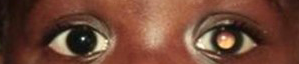
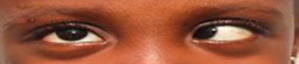
rapid access to a competent team, well-codified treatments applied without delay, and comprehensive insurance coverage. The WHO has included RB among the six childhood cancers for which the CureAll program hopes to achieve a 60% cure rate by 2030.
In sub-Saharan Africa in 2019, fewer than 250 children out of the 2,000 annual cases of RB were cured (survival rate +/- 15%) due to:
- a lack of diagnosis or late diagnosis when the disease is no longer curable
- the difficulty of accessing a trained team
- treatment costs, which are very often borne by parents and impossible to afford.
The reasons for this disparity between high- and low-income countries (such as those in sub-Saharan Africa) in terms of the future prospects of children with RB are therefore known, and some can be changed quickly.
This is the objective of the "RB 2019-29 Program Program" of the Global Alliance Against Cancer (GACC), supported by the Curie Institute in Paris, which is aimed at African ophthalmology teams working in conjunction with pediatricians trained in oncology (pediatric oncologists) as part of a multidisciplinary team. The WCAC, an NGO headquartered at the Curie Institute in Paris, France's leading center for RB, launched its first program to support RB treatment in 2011, designed in collaboration with the team in Bamako, Mali. This program was then implemented in four other cities where the Groupe Francophone Africain d'Oncopédiatrie (GFAOP), which has a partnership agreement with the AMCC, supports a team led by a pediatric oncologist. Following this initial program, which included training, equipment, prosthesis manufacturing, and early diagnosis incentives, it was demonstrated in Mali that RB in sub-Saharan Africa is not inevitable and that the cure rate can exceed 80% if the diagnosis is made early and the child has rapid access to a trained and equipped team. Furthermore, when diagnosis is very early, the consequences of treatment are less severe and the cost is lower, estimated at less than $500 to cure a child in sub-Saharan Africa.
Encouraged by this promising observation, we expanded the program to sub-Saharan Africa in 2019 with the support of a Swiss family foundation.
At the end of this first five-year period (2019-2024), solid foundations will have been laid in 23 countries:
- At least one competent team per country with at least one trained ophthalmologist (in Paris, Bamako, or Barcelona), an ocularist trained in the manufacture of custom-made ocular prostheses (in Paris, Bamako, or Accra) with a facility equipped for manufacturing.
- At least one team per country (see interactive map below) has the equipment to perform enucleation surgeries and, in most countries, conservative treatments for bilateral cases.
- An early diagnosis plan has been launched in most countries.
- Recording of all cases of RB: at least retrospective with annual analysis (approximately 1,000 new cases expected in 2024) and prospective recording in most French-speaking countries.
- In Bamako, where the program began in 2011, the number of cases in remission/number of expected cases was 48% in 2021, which is very encouraging.
- The goal is to achieve at least 70% complete remission by 2029 in most countries.
- In addition to the theoretical and practical training already in place, additional support is organized for all teams that express a need for it, with mentoring by more experienced ophthalmologists in local ophthalmological treatment of RB: occasional local missions by ophthalmologists from Paris, Bamako, or Dakar, as well as support in anesthesiology.
- Zoom meetings every two weeks to discuss difficult cases in terms of diagnosis, management, and conservative treatment, with the participation of experts from the Curie Institute.
The 2nd part of the program, from 2025 to 2029, will support five actions:
- Raise awareness about early diagnosis.
- Increase childcare facilities by supporting staff training in secondary centers in each country.
- Continue initial and continuing training through mentoring (web conferences twice a month, regular workshops and occasional field assignments, access to the DIU (university diploma) in onco-ophthalmology).
- Assist in the collection of reliable data for evaluation and help with the regular publication of results.
- Strengthen advocacy and collaboration with African ophthalmology societies and international bodies (SIOP, WHO, UICC, etc.).
Laurence DESJARDINS, Ophthalmologist - Karim ASSANI, Pediatric Oncologist - Denis MALAISE, Ophthalmologist - Irène KRIEGEL, Anesthesiologist - Allison LOUVET, Ocularist - Pierre BEY, Radiotherapist