


In sub-Saharan Africa, cancer is the third leading cause of death (after infectious diseases, cardiovascular disease, and diabetes). Most patients who seek treatment for malignant tumors in hospitals are still at very advanced stages, often incurable. Nevertheless, these patients should at least be able to receive palliative care and pain management.
As in Europe, palliative care is essential to providing patients with a humane quality of life. An evaluation of continuing education courses organized in West Africa in the 2000s by the AMCC highlighted the difficulties of pain management, mainly related to:
- a lack of systematic pain assessment,
- insufficient control of pain medication prescriptions,
- difficulties in obtaining medicines,
- a specific social context combining financial problems and difficulties in expressing pain and psychological suffering,
- the suffering of caregivers due to their powerlessness.
Although there are currently few known palliative care units or services in French-speaking countries, the situation has changed significantly in terms of continuing professional development, particularly in Benin, where the AMCC is collaborating with the Ministry of Health as part of the National Palliative Care Program.
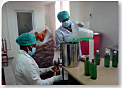
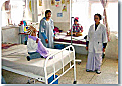
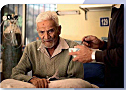

Thanks to the links forged with Hospice Africa and the creation of a French-speaking branch based in Brittany (Hospice Africa France), the palliative care model proposed by Uganda has proved extremely useful, particularly with the use of powdered morphine to combat pain.
The AMCC therefore participated in the development of a continuing education program in palliative care and pain management with the help of volunteer African medical teams. Hospice Africa France provided significant financial support. Multidisciplinary teams from many countries have already participated in these five-week training courses, held in Uganda. Each year, the theoretical (three weeks) and practical (two weeks) components enable many doctors, nurses, and pharmacists to receive training in palliative care.
This program, which is being carried out in Uganda at the International Palliative Care Training Center in Kampala, is open to French speakers with the primary goal of eventually creating referral centers for French-speaking Africa.
Alongside training teams, the AMCC is involved in raising awareness among local authorities about effective and inexpensive pain management and palliative care.
With this in mind, the AMCC has established a partnership with the Association Francophone de Soins Oncologiques de Support (AFSOS) to organize annual Franco-African meetings alternately in France (2012, 2014, 2016, 2018) and Africa (Côte d'Ivoire 2013). Then in 2016 in Brazzaville and in 2017 in Cotonou, Benin. These workshops provided an opportunity to train local teams, raise awareness among political authorities, and promote African initiatives.
Since 2023, the AMCC has organized an annual training mission for caregivers from the 12 palliative care units located throughout Benin. The primary objective is to provide the necessary collaboration for the training and deployment of palliative care throughout the country. The 2025 training focused on wound care and healing for caregivers already trained in palliative care.
Laure COPEL